
Sunrise Food Market – It’s Time for a Publicly Owned Grocery Store
Ian Marcuse
Dec 28, 2025
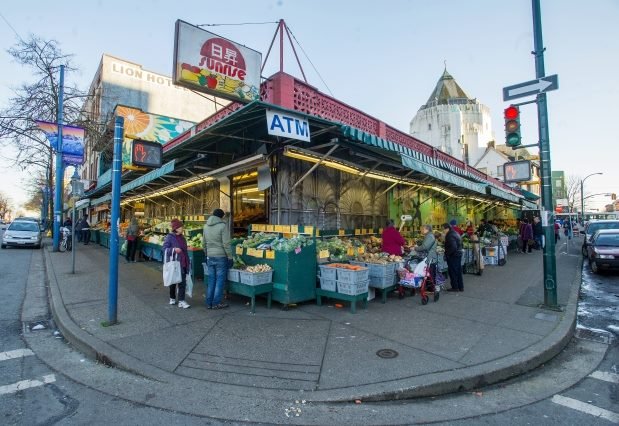
Sunrise Food Market in the Downtown Eastside at Powell and Gore is on the market for $4.5M and the land value, though not for sale at this time, is an additional $3.9M. Sadly, the most affordable food store in Vancouver is unlikely to be reopened in the same manner, if at all. More likely, this vitally important affordable food market will be purchased to maximize development revenue, now boosted by the recently approved ABC dominated City Council DTES zoning changes.
The long-standing Downtown Eastside Oppenheimer District Official Development Plan (DEOD) established in 1982 and revised in 2014 worked to “retain existing and provide new affordable housing for the population of the Downtown-Eastside Oppenheimer area”. In short, the Plan set a requirement that allocated 60 per cent of a new building for non-market rentals — with 33 per cent of this at the welfare shelter rate — and 40 per cent for market rentals. The policy effectively limited the development of market housing in favor of supporting social housing.
The DEOD was critically necessary in keeping land costs low so non-profit housing providers in particular could afford to build low-cost housing. It meant that local residents had a chance to continue living in a community of their choice in new, decent housing.
Recent DEOD changes include zoning amendments that will drastically reduce the number of social housing units and affordable housing in the Downtown dropping the percentage of social housing required in any new mixed-rental development from 60 per cent to 20 per cent,
The changes would also permit buildings up to 32 storeys, so long as 20 per cent of units are designated as social housing. However, only a fraction of those would need to be “shelter rate” affordable to people on social assistance, representing four per cent of the total units.
Proponents of the changes argue that this will free up private capital and other government funding needed to build more housing, including social, however the cost of land will rise as developers compete to acquire property to build market housing in the valuable downtown area. Many rightfully fear that these changes will result in increased gentrification, pushing many low-income residents out of the community.
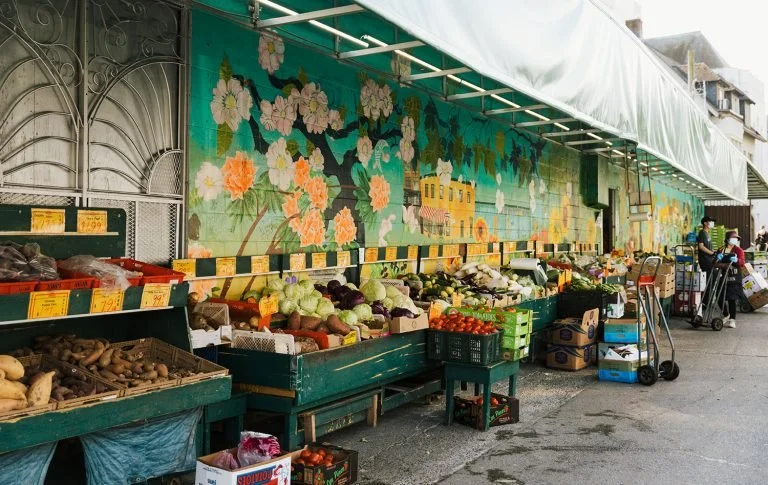
This leaves Sunrise Market as a valuable redevelopment site.
The need for low-cost food stores is especially important in low-income neighbourhoods, though the viability of these smaller grocers becomes unsustainable where land values and rents are soaring. Add in a highly competitive food retail sector dominated by a few large corporations who make it much harder for smaller stores to turn a profit without the benefit of scale and market share, the result is that we are losing our small community grocers.
A recently completed City of Vancouver Equitable Access to Food Retail report provides valuable data that reinforces the need to protect food retail in neighbourhoods with both poor geographical access and low income. The area where Sunrise Market is located is deemed a “food priority zone” where few grocery stores are located providing healthy food options. Policy options include “supporting non-profit organizations to operate food retail”.
Sunrise Market likely operated on a very tight profit margin, as many small grocers do. However, Sunrise was unique amongst grocers in its low prices. Their secret to low costs was the purchasing of highly discounted foods and from well established cheaper food procurement channels. Sometimes this included preferred access to wholesale produce that was slightly less fresh and significantly discounted.
Perhaps it is time to consider Sunrise as a publicly owned food market, owned by all of us and no different than our publicly run community centres, schools or hospitals. Vancouver City, the province, and the feds in partnership with a non-profit would purchase the Sunrise Market and operate it as a fully government funded and regulated food store, capping all products at an affordable price.
The benefits are enormous. In addition to food affordability, these stores would focus on fresh and nutritious foods, prioritize local procurement thus boosting local economic development and agriculture, pay workers living wages, further establishing procurement and public distribution networks that include any number of public institutions.
Government owned grocery stores already exist. Take a look at Mexico whose DICONSA food assistance program was created in 1972 to distribute basic commodities at subsidized prices to people living in marginal urban and rural areas. DICONSA’s operations have grown significantly over time and they now operate 30,000 stores, benefiting millions of consumers.
A number of cities in the US have opened such government funded food stores, though a number have closed citing financial struggles. Their viability will depend on government commitment. More recently, New York Mayor Zohran Mamdani has proposed a pilot program where 5 public grocery stores are opened, one in each new York borough.
Food insecurity is on the rise as many reports are telling us. Recent data is also showing that food insecurity is breaking away from poverty, meaning many households above the poverty line are experiencing food insecurity due to the high cost of food. Income supports may not reach these households; thus other approaches are required to maintain food affordability.
A recent Wellesley Institute policy brief Time to Regulate Food Prices Like a Utility proposes that healthy food staples including dairy, meat, produce, etc. be treated like other utilities such as water and electricity where we already use price regulation to prevent undue price hikes. Price regulation would be based on the current Market Basket Measurement (MBM), Canada's official poverty line, a method to determine low income by calculating the cost of a specific basket of essential goods and services (food, clothing, shelter, transport, other necessities).
Food is a basic need and human right. Canada as signatory to the International Covenant on Social, cultural and Economic Rights along with UNDRIP and the Universal Declaration of Human Rights stipulate that our governments at all levels have the duty to “respect, protect and fulfill the right to food” including affordable food access with dignity free of charity.
Sunrise Market is ripe as a “public” grocery store and would serve as a valuable and much needed affordable food market in the Downtown Eastside.
