Living Wage Report 2025
Executive Summary
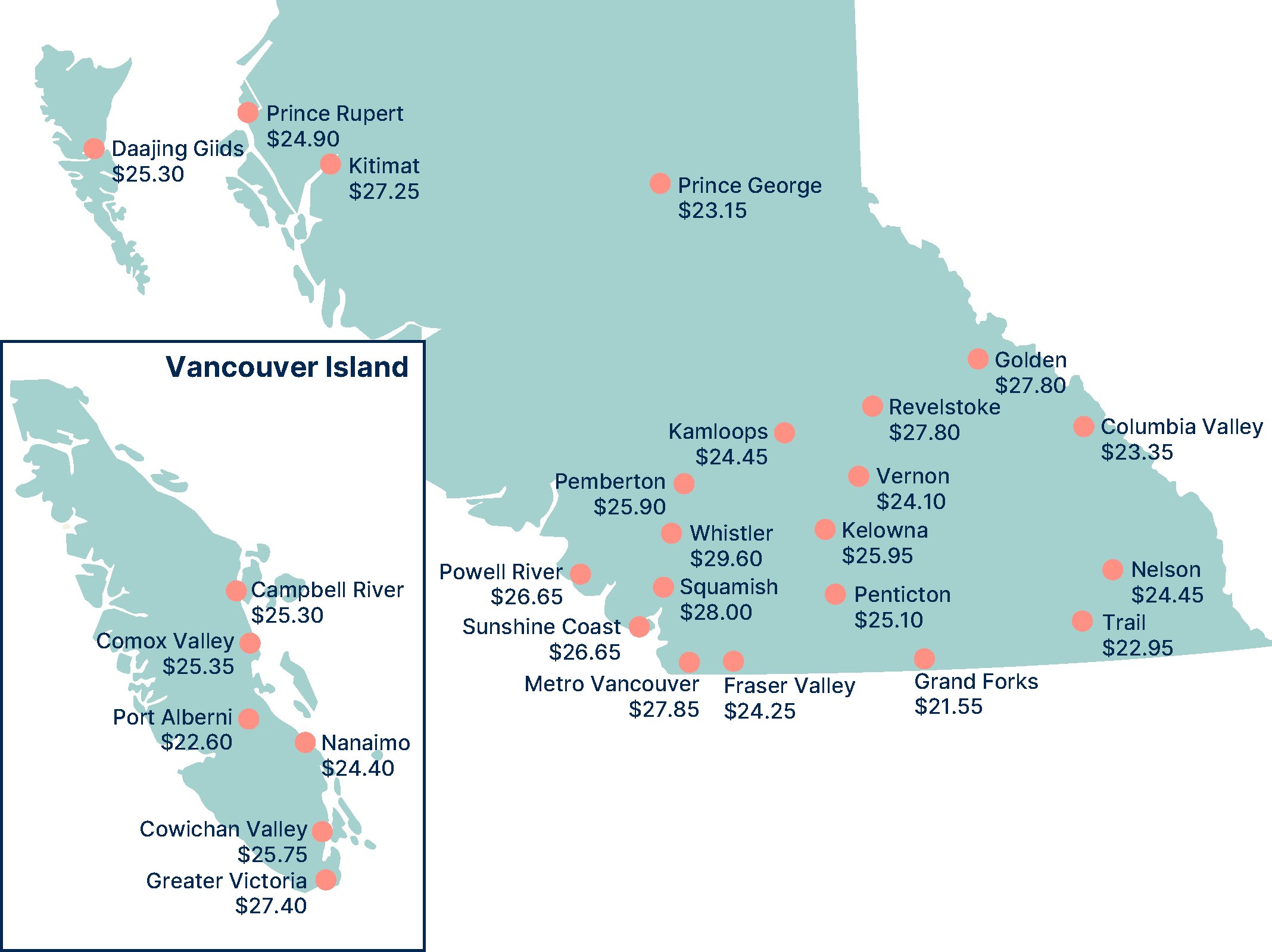
The 2025 Metro Vancouver living wage is $27.85 per hour, up 80 cents from the 2024 living wage of $27.05 per hour or 3% higher. This is largely because of the rising cost of living in BC, particularly for housing as shelter remains the largest expense in the living wage household budget.
The living wage is the hourly rate that a full-time worker must earn to cover essential expenses, avoid chronic financial stress and participate in the social, civic and cultural life of their community. This rate supports a basic, decent standard of living, but without many of the comforts or extras that many may take for granted.
And, there is now a $10 gap between the 2025 Metro Vancouver living wage and BC’s current minimum wage of $17.85 per hour.
To better reflect the experiences of different household types, the 2025 Metro Vancouver living wage calculation is based on the weighted average of the rates for three household types: a two-parent family with two children, a single parent with one child and a single adult living alone.
Although inflation has moderated from the historic highs of 2022, the cost of living in BC continues to rise. Government measures at the provincial and federal levels, including ongoing investments in child care affordability, the full rollout of the Canadian Dental Care Plan and increases to the BC Rental Assistance Program for families with children, have helped offset some of the pressures on household budgets.
However, these gains have been offset by persistent cost increases, particularly in housing. Shelter remains the largest expense in the living wage household budget, with rents rising faster than general inflation and vacancy rates remaining low. Out-of-pocket child care costs have also increased significantly for the two-parent, two-child living wage family, driven by rising fees and reduced eligibility for public subsidies as household incomes grow.
More than half a million workers in Metro Vancouver, representing 36% of all paid employees, earn less than the living wage and face ongoing financial hardship. Many are pushed into Metro Vancouver’s farther suburbs or out of the region entirely.
“Work doesn’t pay enough to meet the cost of living for too many in Metro Vancouver.”
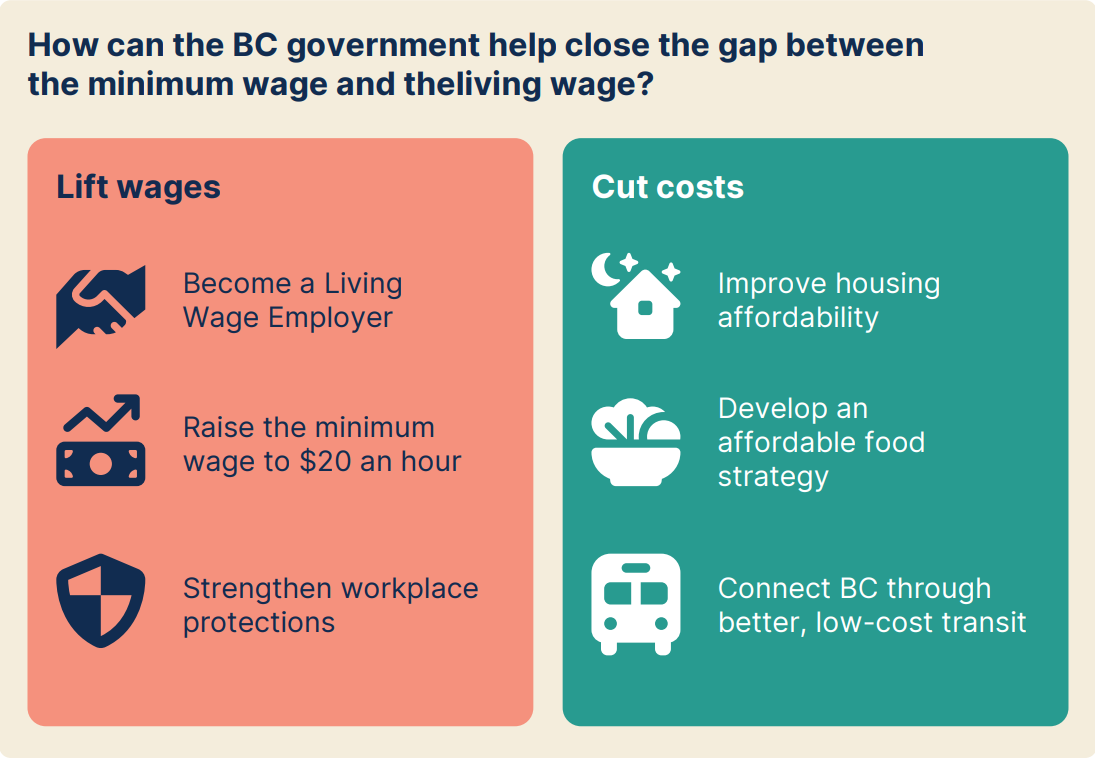
Coordinated action from employers, policymakers and communities is urgently needed to ensure that paid work provides economic security and a pathway out of poverty for all, no matter the job.
In this time of deep economic uncertainty, supporting workers is not only morally right, it is smart economic policy. Raising wages for low-paid workers is a sound investment in the local economy because lower-income families tend to spend most of their earnings in their own neighborhoods, supporting small businesses and community services.
Strategic public investments in housing affordability, public transit, mental health and programs that reduce costs for people will create local jobs while making BC’s economy stronger, more resilient and more equitable.