
Response to Mark Carney’s Affordable Food Announcement: The Right to Food. Why it Matters.
Vancouver Food Justice Coalition
Feb 2, 2026
Ian Marcuse, Graham Riches, Vivian Davidson
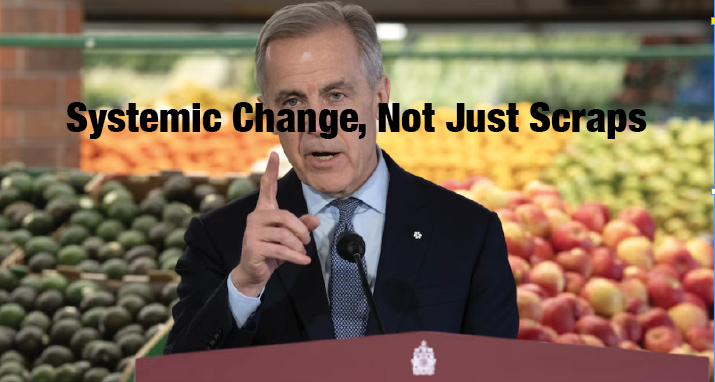
"Many countries are drawing the same conclusions. They must develop greater strategic autonomy: in energy, food, critical minerals, in finance and supply chains.… A country that cannot feed itself, fuel itself or defend itself has few options. When the rules no longer protect you, you must protect yourself."
— Prime Minister Mark Carney at 2026 Davos Summit.
Described as a historic speech by many in Canada and the international community, those of us in the food security sector were left to interpret Mark Carney’s reference to food autonomy as a hopeful sign.
Surely, ensuring no one in society is left hungry is an essential hallmark of a resilient and wealthy, healthy and educated nation well able to withstand US threats to our collective social well-being and national sovereignty.
Yet the recent announcement by the Prime Minister on new measures to make groceries and other essentials more affordable for Canadians makes no direct mention of food as a basic human need nor of the right to food.
Despite strong public calls to address housing and food affordability, for the time being, hungry Canadians will be limited to temporary rebates and another $20M to bolster public funding for food banks, they are not yet Ottawa’s priority.
Especially galling given the escalating national crisis of “food insecurity” – in plain speak domestic hunger - with one in four income poor Canadians finding it difficult or unable to put food on table. This failure costing billions in health care costs and inadequate and misdirected social spending.
Certainly, developing a National Food Security (NFS) strategy to “tackle the root causes of food insecurity – one that strengthens domestic food production and improves access to affordable, nutritious food” is commendable but silent on the right to food.
The Right to Food
Nowhere addressed in Mark Carney’s statement was Canada’s ratification 50 years ago of the right to food under international law the International Covenant on Economic, Social, and Cultural Rights (ICESCR). The Vancouver Food Justice Coalition (VFJC) will be looking closely to see whether the NFS strategy intends to guarantee this right as an overarching strategy. Dignified food access to food is a universal human right but too long neglected.
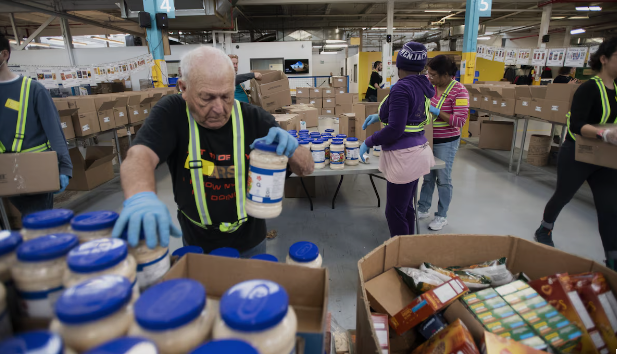
Instead, we remain locked into dependence on US style Big Food charity and corporate food banking inherited from south of the border in the early 1980s. Of note, the US has never ratified the right to food.
Surely Canada’s food sovereignty buttressed by international law and the right to food must ensure food security for all in Canada. Why not stand tall and face-off the cross-border taunts of being the US 51st state in matters of our income security, food and social policies.
Our ability to hold the government accountable for the right to food depends on constitutional, legislative or legal authority. In other words, a comprehensive right to food normative policy framework is needed to guide the NFS strategy to achieve food security for all.
It is welcome that such a framework has been developed within the UNFAO especially so, that an FAO RTF specialist is now based in Montreal has recently been appointed to promote the right to food in North America. A critical source of advice and support. Civil society and governments at all levels across Canada stand to benefit.
Canada's ratification of the right to food under international law invites revisiting the Charter of Rights and Freedoms (1982) which omits specific reference, though it is implicitly protected under Section 7 (right to life, liberty and security of the person) and Section 15 (1) equality rights). Yet, decades on such protections have failed to abate let alone end domestic hunger across the land.
Entrenching the right to food within the Charter would obligate Ottawa, provincial and municipal governments to ensure all citizens live free from hunger. Given that we are all rights holders, the government has a primary duty to ‘respect, protect, and fulfill’ the right to food by creating the enabling conditions that allow people to feed themselves and their families with choice and dignity.
Income policies
We must take decisive action now to address the underlying causes of food insecurity, namely low incomes, unemployment, weak social security programs and affordability.
Our failure to protect and guarantee these rights is most evident in the astounding 25% of Canadians as reported in the latest University of Toronto PROOF report living in food insecure households.
The VFJC is calling for an end to government funding of foodbanks. While we do not disparage the many organizations doing food banking work because they genuinely care about people’s well-being, continued support and expansion of food banking undermines government accountability for tackling the root causes of hunger. Setting boundaries to food bank growth by redirecting public resources to structural change is essential.
The Canada Groceries and Essentials Benefit announced will undoubtedly provide a needed boost of approximately $790 per year (or $65/month) for a family of four whose low-income threshold is around $46,432 in most cases. The benefit is gradually reduced above this threshold as the family net income rises to the income cut-off. While the credit is expected to benefit some 12M families, for many middle-income families who still experience food cost pressures (food expenses above 20% of their total income), they will not receive this rebate.
This boost, however, may not keep up with the forecasted 4% to 6% food price increases in 2026 with a family of four predicted to spend an additional $994.63 from last year according to Canada’s Food Price Report 2026. Nor will this rebate make up for the 27% increase in food costs since 2020. GST rebates are limited in scope, do not guarantee a minimum income level and offer only temporary relief from specific tax burdens.
Seriously tackling the roots of food insecurity will require much stronger income policies ensuring no one falls below the poverty line. A basic income guarantee is one such policy that can provide a consistent and reliable form of income support set above the poverty line. Just as universal healthcare is there when people need it, a basic income guarantee should be there to ensure that no one lacks the ability to pay for essentials like food.
Civil society action and advocacy
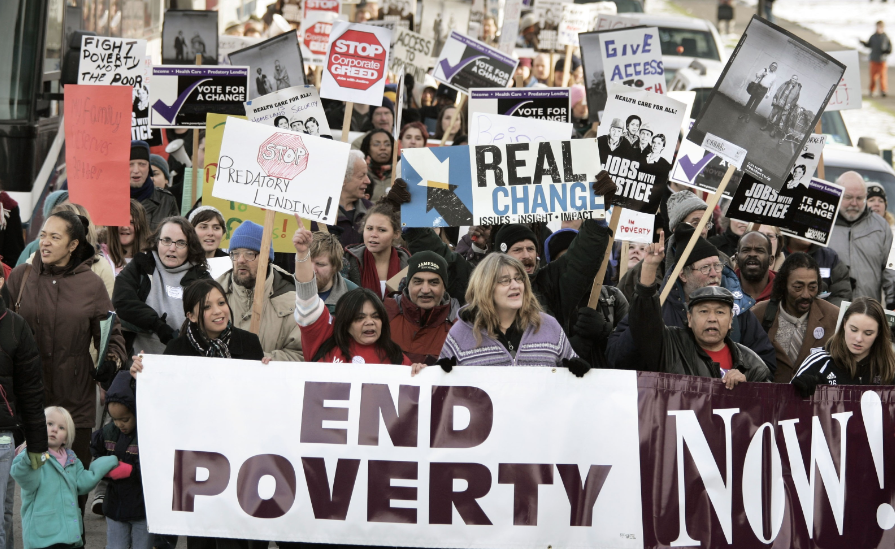
A strong civil society representation is needed with the power of self-determination and agency in defining our own local food and farm systems and economies that ensure the right to food for all.
On a positive note, the announced $150-million Food Security Fund to help small and medium-sized food businesses and growers build capacity including expanded greenhouses and abattoirs is certainly welcome. This will help to strengthen local food systems including direct farmer/producer to consumer markets e.g. farmers markets, distribution and local supply chains, and food hubs.
A further $500 million from the government's Strategic Response Fund to help food suppliers "expand capacity and increase productivity". While this priority more closely aligns with Ottawa’s pro-business restructuring of trade and other economic relationships, it risks further entrenching corporate food banking in the national food system, possibly leading, as many fear, to further cuts to social, education, health services and environmental protections. Rolling back such protections or supports would further drive food injustice and precarity.
Political will
Despite loud calls from civil society to recognize and advance the right to food, Ottawa’s announcement is silent and indifferent.
Band-Aid solutions to solving food insecurity have been the norm since US style corporate food banking first arrived in Edmonton Alberta in 1981. 45 years on such food charity, annually cheered on by the CBC, for all its good work remains an overworked and inadequate national backstop with levels of food insecurity climbing upwards. The right to food matters.
Today’s troubling times call for a new boldness in building just and equitable food and income policies and a social system that includes the active and intentional pursuit of structural change rather than mere incremental reform.
A bold new food strategy must ensure that we end hunger once and for all - a declaration to the world that we are a wealthy, compassionate and caring society informed by international law and human rights. The right to food framework and resources for universal food security are available.
The right to food matters. Where is the political will?
